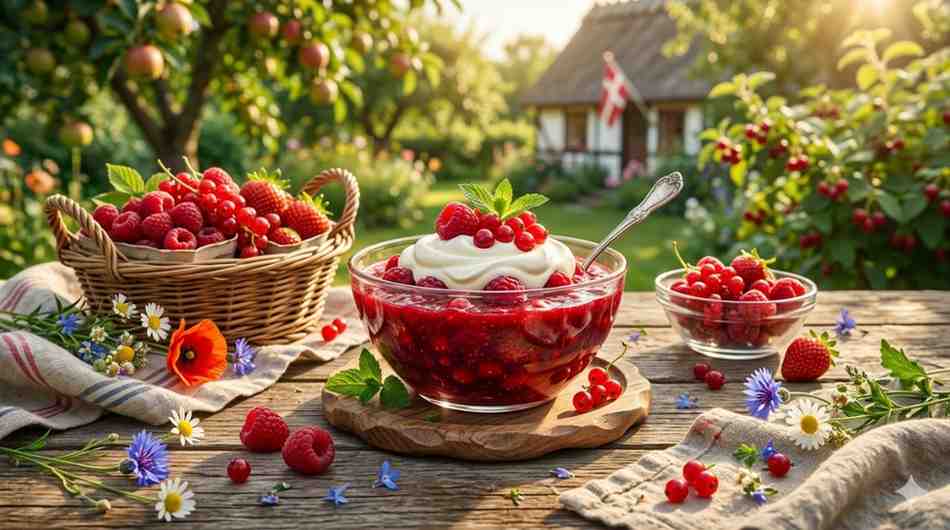
Some desserts dazzle with elaborate decoration. Others impress through technical precision and complexity. But the most memorable often tell a story—of seasons, family traditions, and the simple joy of ingredients at their peak.
In Denmark, few desserts embody that spirit more beautifully than Rødgrød.
Bursting with the vibrant flavors of summer berries, this humble dish has long held a cherished place at Danish tables. Sweet yet slightly tart, rustic yet elegant, Rødgrød is more than a dessert. It is a celebration of fleeting summer days, abundant harvests, and the enduring comfort of homemade food.
For many Danes, a bowl of Rødgrød tastes like childhood, sunshine, and home.
A Dessert Rooted in Simplicity
At its heart, Rødgrød is remarkably uncomplicated.
The name itself translates roughly to "red porridge," a nod to its humble origins. Traditionally prepared by simmering fresh red berries with sugar and thickening the mixture until it achieves a silky, spoonable consistency, the dessert showcases the natural beauty of seasonal fruit.
Depending on the region, household traditions, and what happens to be growing in the garden, Rødgrød may feature a variety of berries, including:
- Strawberries
- Raspberries
- Red currants
- Black currants
- Cherries
- Cranberries
Each family recipe carries its own personality. Some favor sweetness, while others preserve the bright tartness of the fruit. Yet the essence remains unchanged: allowing summer's bounty to shine.
The Taste of a Danish Summer
Long before refrigeration and global supply chains made ingredients available year-round, seasonal cooking shaped everyday life.
Rødgrød emerged from practicality as much as pleasure. During the warmer months, Danish households found creative ways to use the abundance of freshly harvested berries before they spoiled. Transforming them into a comforting dessert ensured that none of nature's generosity went to waste.
The result was a dish deeply connected to the rhythms of the seasons.
Served chilled on warm evenings, Rødgrød became synonymous with family gatherings, garden meals, and the carefree atmosphere of Scandinavian summers.
Even today, its arrival on the table signals that summer has truly arrived.
The Cream That Completes It
No discussion of Rødgrød would be complete without mentioning its classic companion.
Cold cream.
Traditionally, Rødgrød is served with a generous pour of fresh cream, creating a striking contrast between the jewel-toned berries and the pale richness of dairy. Some households prefer milk, while others opt for whipped cream to add a lighter, more indulgent touch.
The pairing transforms the experience.
The berries provide brightness and acidity. The cream softens their sharp edges, lending balance and luxurious texture. Together, they create a dessert that feels simultaneously refreshing and comforting.
Simple ingredients become something quietly extraordinary.
A National Symbol in a Bowl
Rødgrød occupies a unique place in Danish culture.
Beyond its culinary appeal, it has become something of a national icon thanks to its famously challenging pronunciation. The phrase "Rødgrød med fløde"—meaning "red porridge with cream"—has long been used as a playful linguistic test for visitors attempting to master the nuances of the Danish language.
Its soft consonants and rounded vowels have inspired both amusement and pride.
For Danes, the dessert represents more than a tongue twister. It reflects an appreciation for modest pleasures, local ingredients, and traditions passed down through generations.
It is distinctly Danish in both flavor and spirit.
Why Seasonal Food Matters
In today's world of instant availability, it is easy to forget the anticipation that once accompanied seasonal ingredients.
Rødgrød reminds us of the value of waiting.
Berries taste sweeter when they arrive at their natural peak. Recipes feel more meaningful when they mark a particular moment in the year. Seasonal dishes encourage us to pay attention—to weather patterns, harvest cycles, and the small rituals that connect us to place and time.
There is wisdom in that simplicity.
Rather than demanding extravagance, Rødgrød celebrates abundance exactly as it appears.
Bringing Rødgrød to Your Table
One of the dessert's greatest strengths is its accessibility.
It requires no advanced pastry techniques or specialized equipment. Whether prepared with freshly picked berries from a local market or fruit gathered from a backyard garden, Rødgrød invites home cooks of all skill levels to participate in a cherished tradition.
Serve it after a summer barbecue, at an afternoon gathering with friends, or as a quiet weeknight treat enjoyed on the patio as daylight lingers late into the evening.
Its versatility is part of its enduring appeal.
More Than a Dessert
Rødgrød is not designed to impress through extravagance.
Instead, it offers something far more lasting.
It celebrates the sweetness of seasonal abundance, the comfort of familiar recipes, and the memories created around shared tables. It reminds us that food does not have to be complicated to be meaningful.
Sometimes, the most treasured dishes are those that capture a season in a single spoonful.
A handful of berries.
A splash of cream.
And a timeless reminder that the simplest pleasures often become the ones we remember most.
In Denmark, Rødgrød is more than a beloved dessert.
It is summer itself—served cold, bright red, and best enjoyed with the people you love.